

OUR BLOG
Thoughts
&
Musings
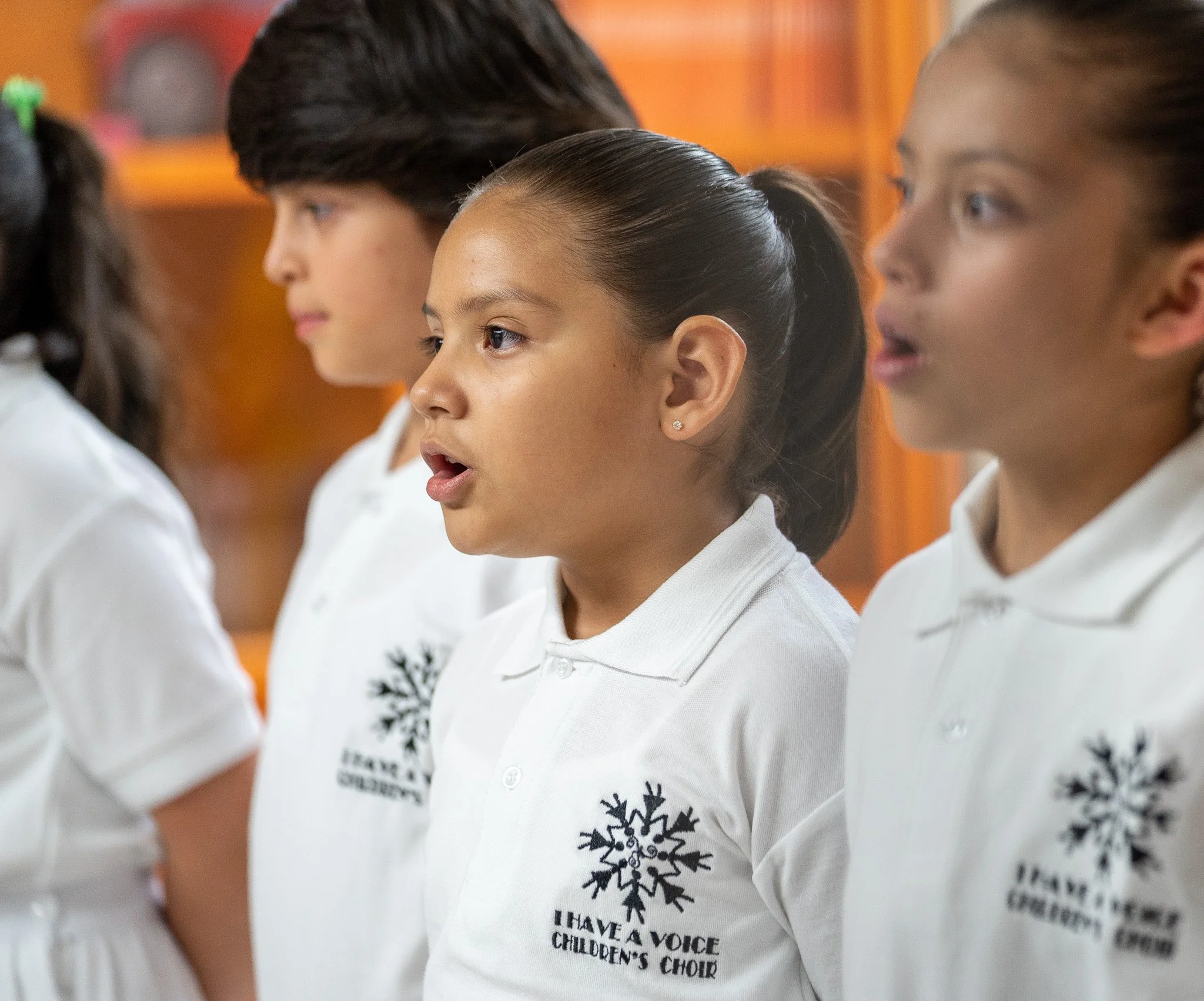
Have you ever been interested in the Human Anatomy of singing?
Voice physiology
The voice, also known as phonation, is the result of several steps carried out by organs, muscles and bone structures. It could be defined as the sound produced when the air is exiting the larynx, which makes the vocal cords vibrate, but it is something more complex than that.
The following systems are used when singing:
1) phonation system
2) respiratory system
3) resonance chamber

Voice is a natural instrument we all possess that encompasses three qualities:
1) Timbre
2) Tessitura
3) Intensity

These three qualities are limited to the physical characteristics of each human being. The tessitura (italian word for texture - general range of pitches found in a melody or vocal part) is determined by the length and mass of the resonance chamber - larger the chamber, the lower or deeper the voice of the singer (the vibrational frequency of such chamber will be lower).
On the contrary, the larger the vibrational frequency, the higher-pitched voice and smaller the resonance chamber.
Once the sound is emitted from the larynx, it resonates in the chest, throat, and/or vocal resonators. The intensity and timbre of the voice depends on the resonance, the way the vocal cords vibrate and the use of the resonators for each vocal range.
The respiratory system is the place where the air is stored, it is divided into two parts:
1) The lower tract - starts in the trachea and ends in the lungs going through the bronchus, bronchioles and alveolus.
2) The upper tract - includes the nasal cavities, mouth, pharynx and larynx.

The vocal cords are located at the larynx, which is mainly cartilage; a small bone called hyoids which is surrounded by muscles.
The larynx is composed by nine muscles, and if we consider singing to be mainly a physical activity, we need to activate all these muscles before we launch them into the marathonic process of such activity. Only one of these muscles is in charge of closing the larynx, this is the respiratory muscle, and it should be the first one we need to activate during vocalisation. The other eight muscles are directly involved with phonation, hence their name, phonation muscles.

From there we go to the location of our air tank. The lungs are protected by the thoracic cage, which is linked to the vertebral column via the sternum. Just under the lungs we have the diaphragm where the lungs rest, when the diaphragm contracts the lungs expand, and the air comes into the body naturally, we do not have to think about lowering the diaphragm to breathe, otherwise we could suffocate and die if we didn’t pay attention or were asleep - these movements are completely involuntary. Once the air enters the lungs, the diaphragm relaxes and the lungs contract releasing the air.
It is important to emphasise that the diaphragm is an involuntary muscle, which means we aren’t required to control it. However, the muscles that we can control are the intercostal muscles, these help the ribs to move either, upward (“pigeon chest,” I made up this term) or to the sides (“toad’s back,” I also made up this term). When using these muscles, we then can control the size of the thoracic cavity and the intake and release of the air.

Vocalization is the simplification of the most basic forms of voice emission. We do this by controlling the emission, treating each part of the body we use when signing as a separate tool, and then adding different muscles with each exercise.
I will expand on Vocalisation on my next blog post.

This blog has been written by Yonora Guzmán Aguilar one of our I Have a Voice Choir Masters.

Why is Vocalisation important for choir members?
Vocalisation is the practice of making vocal sounds, usually without singing words. It is a way for singers to warm up their voices, practice vocal techniques, and improve their overall vocal ability. Find out all about Vocalisation here.
Vocalisation is the practice of making vocal sounds, usually without singing words. It is a way for singers to warm up their voices, practice vocal techniques, and improve their overall vocal ability. Vocalisations can include scales, arpeggios, and other exercises that are designed to help singers develop control over their voices. These exercises can help singers to improve their pitch, tone, and breath control, and can also help to prevent vocal strain or injury. Vocalisation is an important part of a singer's practice routine, and is often used as a way to warm up before singing or performing.

Vocalisation is important for choral singers because it helps them to develop good vocal technique and to produce a clear, well-controlled sound. In addition, vocalisation can help singers to develop good posture, which is important for good vocal production.
This important element has multiple purposes, among which we can highlight the following:
Focuses attention
It allows the mind of the child or chorister to connect with the moment of the rehearsal, to get involved in the idea of making music together, to leave problems, pending issues and concerns outside the choir room and focus their attention on singing.
Prepare the voice to sing
When we vocalize, we condition the vocal apparatus and all the muscles involved in the singing activity, such as the tongue, cheeks, lips and of course the vocal cords, in the same way that an athlete conditions his body.
Address technical complexities
Vocalising allows us to solve the technical difficulties that we find in the various passages of the musical work, without the need to sing the complete melodies and focusing on the most complex points, such as jumps, chromaticism, very long phrasing and other melodic movements.
Listen to themselves and others
It allows choir members to appreciate the results of group singing, as well as laying the foundation for developing vocal independence and blending of voices. This is a very important point, since achieving goals such as singing for 2, 3 or even 4 voices depends on it, which translates into works of greater difficulty and beauty.
Proper breathing habits are generated
During the vocalization, correct breathing is practiced, to help build awareness of the function of the diaphragm, a muscle located below the ribs and on the organs of the digestive system. The diaphagm allows the chorister to increase their air resistance to perform the correct phrasing of the musical work, as well as maintaining the "support" that prevents the sounds from falling out of tune or the voices echoing an excess of air.
To establish the unification of vowels
Achieving verticality in the placement of the vowels, looking for what we know as the "yawn" position, is another of the tools that we develop in vocalization. This verticality allows the sound of the choir to be unified.

Ideas for Vocalisation Activities
If you need some help with fresh ideas for vocalisation, here are some of my favourite vocal exercises:
Silly faces
The cleaning tongue: moving the tongue inside the mouth, from one side to the other, as if trying to clean the teeth
Chewing: move the mouth as if we were chewing a huge piece of gum
Send kisses: make the kiss faces and send them into the air
Pop a balloon: Inflate and deflate cheeks as if pricked by a needle
Make a fish mouth
2. Trumpets (buzzing with lips)
Using any number of scale degrees, the more the better, and even without defined tuning, just releasing the lips from tension while we hold the trumpet. Double advantage, it also raises the veil of the palate.
3. Speak yawning
Talking as if we were yawning all the time.
4. The sound Ng
To activate the resonators and place the voice in the yawning position
5. Cuevitas (Little Caves)
Inside the mouth becomes a cave while we try to generate an “M”, singing two or three degrees of the scale, starting in a low register (middle C for children) and looking for vibration.
6. Sirens or Ambulances
The sound of the glissando (gliding from pitch to pitch), either starting on a low sound or starting on a high sound.
7. Descending melodic movements
Begin at the 3rd, 4th, or 5th degree of the scale descending in joint or arpeggio degrees.

This blog piece was developed by Esmeralda Jiménez Olmos, one of our I Have a Voice Choir Masters that is currently looking after our program at Hogar Para Niños Morelia.
Find out more about our program here.

Warming up Your Voice
By properly warming up your voice prior to singing, you will see improved performance, experience an increase in your vocal stamina and energy. Plus, it helps to establish correct singing technique. Learn some secrets from our professional choir masters.
It is important to take the time to engage, prepare and ‘turn on’ our body before any exercise, your voice is no different. By properly warming up your voice prior to singing, you will see improved performance, experience an increase in your vocal stamina and energy. Plus, it helps to establish correct singing technique.
If you are not certain on what a proper vocal warm up looks like, we hope this blog post can help. We will outline some specific exercises, an appropriate duration and some techniques that will work best for your age and voice type.
After reading this article, you should be able to tailor a warm-up session suited to you!

Vocal Warm Up Duration
The appropriate duration for a vocal warm up is really dictated by your age.
Younger singers are more suited to a short time period for optimal performance. An interesting point is over-warming up can sometimes have negative impacts. For children aged under 10, about 5 minutes is totally acceptable. If you are between 10 and 16, extending that time slowly to 10 minutes will help, especially as both male and female voices change during this adolescent period. Once you turn 18, warm ups will begin to vary depending on the singer and the context, but generally will last around 15 minutes. Professional singers adhere to this time formula also. Keep in mind that over-singing in a warm-up and tiring your voice before a lesson or performance is something to avoid.
Age Appropriate Vocal Warm Up Exercises
Now that you know how long a warm up should be, we hope to provide some ideas for what to do. With so many ideas out there, it can be confusing about which is best. Here are some ideas about what to include for your relevant age and voice type.
Children Under 10
Keep exercises simple for children under 10 years. Items that are light and easy generally work best and ensure all warm ups are conducted within a comfortable range. Start with a few key technical exercises involving breathing, posture and expression. Going up and down five notes on a ‘ba’, ‘doo’ or ‘nya’ is simple yet effective. We usually use a keyboard to assist with scaling of notes.
The deliberate use of nonsensical syllables is not only entertaining for the child but is a subconscious exercise in creation of vowel shapes and evenness of tone.
Furthermore, changing from a minor to a major pattern can educate the child on mood, and hence phrasing. With younger children especially, asking them to imitate a gorilla or a mouse is a fun and engaging way to expose them to dynamics and manipulating colour.
Don’t forget to include non-vocal warm-ups. These are important as well and can include exercises such as lightly shaking limbs and stretching the neck to help reducing tension and raising energy levels.
Teenagers
Into the teenage years, the fun games tend to be less effective and can be replaced with analogies and imagery.
Some examples can include thinking there is an apple, or a tennis ball between your back teeth, and sing a minor triad up and down on ‘vee’. This immediately opens the throat and with that comes a higher chance for a resonance. The preceding ‘v’ consonant can activate the breath and give the pitch energy and accuracy before the vowel.
You could also try, for example, singing on ‘nor’ moving from (intervals) 5-3-4-2-1. Aiming for musical smoothness by ‘seeing’ the notes in front of you as one continuous line rather than as stepwise movement increases balance and evenness of breath. Singing an arpeggio all staccato is a great way to ensure that tension is minimal in the jaw and neck, and the breath is doing the work to create the sound.
During the teenage years, it is important to slowly start adding a few more technical points to consider, and setting your warm-up goals a little higher. Stretching the neck is still brilliantly helpful for singers in this age group. Try adding in a few breath exercises such as letting out a steady stream of air on an ‘ssss’ or on a vocalised ‘thhhhhh’. This brings attention to the diaphragm which can be helpful, especially during the eventual transition of male voices, which relies heavily on appropriate breathing control to remain healthy through this time. Another consideration may be accessing your falsetto range; playing around here can help blend it in with your changed voice when things settle.
Adults
In the adult years, the type of warm-up stays relatively similar to the junior years. Silly vowels and words are still quite important to your vocal development. On top of this, try to healthily and safely extend your vocal range higher and lower while experimenting with a variety of tone colours. Another important element to work on developing is a deeper sense of expression, musicality and performance-wise while singing.
Indeed, your warm-up may even change in structure, and evolve to include a short canon, or even one of your own pieces of repertoire, but singing it all on a particular vowel. At this stage, thinking about detail also becomes important. Key details such as vowel onsets, phrase shapes, knee tension and gestures are some things for you to consider as you warm-up.
An all-time favourite warm-up exercise is the lip trill. Imagine you are trying to feed a baby their food, but they are stubbornly refusing. To entice them, you make the aeroplane sound with your lips, moving the spoon like an aircraft until it ‘lands’ in the baby’s mouth. That sound you make is called a lip trill: applying light contact the lips, a then exhaling and vocalising to make the lips freely move. This is a fantastic warm-up that I know all of my coaches use, as I do too! It’s a fantastic tool to create an engagement with your air supply, it’s great for enhancing energy and stability in the sound, and it can be used in all places of your range! Try it out, and see what you think!
Warm-up in Style
So now you know exactly how long to warm-up for, and what with! Some variations will occur in warming up your voice if you decide to focus on a particular style of singing. Pop singers may practice their belting range in a warm-up, and look at trying some riffs, runs, hits and embellishments to prepare them for a song. Opera singers will warm-up with a lot of stretching to loosen all tension, engaging their central breathing muscles, and singing a lot of open vowels to get a clear and anchored tone. Jazz singers may use a much lighter style in their warm-up, especially across their upper range, and could warm-up using a scatting technique. Country singers may want to try adding a little bit of extra brightness or twang to their overall sound.
Warm-up options are plentiful so if the ideas or suggestions do not suit your needs simply use this as a guide to finding appropriate warm ups that cater to your specific vocal needs and abilities.
Most importantly, always take the time to warm up healthily and properly to maximise your performance and preserve your voice.

Why Singing? The Passion of Singing explained.
Singing predates the development of spoken language, so it is not hard to view singing as an art form and an extension of yourself. We unpack why we have a real passion for singing. Somehow, we don’t feel like we are alone.
Why do we sing?
Singing predates the development of spoken language, so it is not hard to view singing as an art form and an extension of yourself. At its absolute core, it is a pure expression of self and the creation of something beautiful.

Singing is a way of sharing mood and emotions without the use of words.
It doesn’t matter if you are singing for yourself, the school choir, your church, karaoke or for an audition for You are the Voice. The most important thing is to be singing for an intrinsic reason. Find someone that you trust and whose opinion you value to help hone your skills and improve your voice and performance.
“Understanding and appreciating art is so helpful when it comes to processing the hard stuff in the world. Music is a safe place to let out emotions. An outlet for times you feel powerless and it can be invaluable in your emotional survival. Art can be such a powerful tool for children to express themselves.” Jennifer Nettles, Sugarland
After conducting an appropriate warm up, a mindful singer can really let themselves be free and use singing as a platform for their individual self expression. For those that enjoy singing, having this platform that allows the release of strong feelings and emotions helps to highlight the reason why they are passionate about singing.
Some of the reasons to take voice lessons or join a choir include a range of benefits that include an improved self-confidence, increased attention span, improved reading and literacy that includes both music and reading comprehension, improved analysis of literary content, developing connection to real life experiences, improved communication skills, improved breath control which can be beneficial for asthma sufferers, a greater mind and body connection and an emotional outlet that may promote positive mental health.

It is clear that the team from I Have a Voice Orphans Choir is passionate about singing, not only for the music and art but for the additional benefits it provides an individual. Find out more about our program here and the work that we have been doing with our choirs in Mexico and Australia.

9 Benefits of Singing
We all know that singing is good for us - discover 9 of the biggest benefits of singing here.
It doesn’t matter how good you are, whenever we hear a song that we love or a tune that reminds us of a special time - it is hard not to sing along. Despite our range of abilities, it appears we all understand something positive - almost therapeutic comes out of the act of singing.
Fortunately, this feeling isn’t just anecdotal and there has been some interesting scientific research that backs up these sentiments. Both our body and mind benefit.
Let’s take a closer look at some of the physical and mental health benefits associated with singing.

9 benefits of singing
Song has been a part of civilisation for centuries and there has been decades of research into the benefits of singing individually and in groups. Let’s unpack them and their relevance to our work at IHAVOC.
1. Relieves Stress
Cortisol is the stress hormone that we all have in our bodies. A 2017 study examined the levels of cortisol in participants saliva before and after they sang.
Research showed that stress hormone levels are lower after some tonal voice work which gives an indication that people feel more relaxed after singing. Importantly, these benefits are experienced in participants who sang in groups or by themselves.

2. Stimulates the immune response
Certainly relevant at the moment during the Covid-19 pandemic, evidence suggests that singing can help improve your immune system and help combat illness.
When comparing the effects of singing compared to listening to music, a 2004 study confirmed that those who sang showed higher levels of immunoglobulin A, an antibody that our body secretes to help fend off infections.
Interestingly, just listening to music didn’t trigger this same response.
3. Increases Pain Threshold
Fortunately, this benefit is only experienced when singing in groups like our IHAVOC choir groups.
When joining in chorus with other members (both large and small groups), the act of collective singing causes the release of the feel good hormones in our body. Endorphins help promote feelings of positivity and even change our perception of pain.
A 2012 study found that singing, percussion, and dancing in a group triggers the release of hormones that raise your pain tolerance in ways that just listening to music doesn’t.
Researchers note that the feelings of social connection, rather than the music itself, seems to be behind the boost in pain tolerance.
4. May improve snoring
Sleep is one of the most important parts of our day and provide an opportunity for our brains and bodies to recover, learn and re-energise for the coming day.
Singing has been shown to change the way you breathe, even when you are not singing.
Snoring is one of the main challenges to productive sleeping and a study conducted in 2008 claimed that significantly fewer choir members snored at night. Similarly, musicians that played wood wind instruments also experienced fewer snores throughout a regular night’s sleep.
It has prompted some experts to suggest singing as a helpful remedy for people with obstructive sleep apnea which causes snoring.
5. Improves Lung Function
When belting out a tune, it isn’t uncommon if we are really getting into it, we can feel out of breath.
Singing involves deep breathing and the controlled use of muscles in the respiratory system. It may also be beneficial for certain lung and breathing conditions such as asthma, cystic fibrosis, multiple sclerosis and many others.
Don’t get us wrong, singing doesn’t treat or cure any of these conditions but may assist with gaining strength in our muscles responsible for breathing.
Additionally, the amount of oxygen in our blood increases when singing. As well as the addition of the benefits to our lungs, the increased oxygen helps improve mood and if singing in groups, promotes a greater sense of social connection.
6. Develops a sense of belonging and connectedness
We all like feeling like we belong and are connected with our peers. When singing with others, you are likely to feel the same level of friendship and bond with players of a sporting team.
Research conducted in 2014, studied over 11,000 school aged children to discover that singing and musical engagement programs developed a strong sense of community and social inclusion.
This isn’t just experienced in young people, a study carried out in 2016 that involved 375 adults found that people who sing together in a group reported a higher sense of wellbeing and meaningful connection than people who sing solo.

7. Helps with Grief
We explored earlier how singing can help improve our tolerance to physical pain. Benefits also extend to group singers to help reduce emotional pain, particularly after the loss of a loved one.
In a 2019 study conducted among people dealing with grief, researchers found that those who sang in a choir experienced significantly lower depressive symptoms and their sense of wellbeing remained more stable during times of grief.
Researchers concluded that group singing may be a good option for people who need additional support during a time of grief.

8. Improves mental health and mood
Researchers found during a 2018 study that participants reported improvements in their mental health, mood, sense of well-being, and feeling of belonging as a result of singing workshops.
Singing has been proven to increase oxygen levels, endorphins and other hormones responsible for positive mental health. Meaningful connection to singing groups help promote self esteem and improved feelings of self worth.
9. Helps improve speaking abilities
Singing has been proven to stimulate multiple areas of the brain at the same time. Research indicates that it may enable people with an impairment in one part of the brain to communicate using other areas of their brain.
Singing can also prolong the sounds in each word, which may make it easier to pronounce them.
Singing also makes it easier to incorporate hand-tapping, a method that can help people maintain speaking rhythms that are otherwise challenging.
What this means for our program?
Singing was chosen deliberately as a vehicle for personal development in the lives of children in our program to help combat examples of disadvantage they have faced or will face in the future. We use our singing groups to build self esteem, positive mental health and confidence that help develop connection and community in our groups.
Find out more about our specific programs here.